Two hot-button topics in Amherst County, a proposed data center near the Madison Heights Town Center development and a referendum to bring a Rosie’s Gaming Emporium to the county, drew public comments at the board of supervisors’ Sept. 1 meeting.
Ernie Guill, a retired longtime educator for Amherst County Public Schools and former principal at Amherst County High School, spoke to the board of the county’s need to generate more tax revenue through growth. He said Nelson County schools pay significantly more than Amherst schools, along with excellent schools, and the county needs more funding to help make its school division more competitive in employment.
“You cannot run this county on real estate taxes,” Guill said, adding the county needs more economic development.
In fall 2021, a referendum on pari-mutuel wagering that would have allowed a Rosie’s location planned for the Seminole Plaza Shopping Center in Madison Heights was defeated by 54% of the county, a difference of just more than 1,100 more people against it than those who voted in favor. That question is coming back around for a vote in the Nov. 3 election.
People are also reading…
Guill acknowledged the public opposition and said he himself doesn’t gamble but noted Amherst County Sheriff Jimmy Ayers — who five years ago was serving as a county supervisor — thoroughly looked into a Rosie’s in the town of Vinton at the time and did not believe it would be a negative business for Madison Heights.
“It will create jobs,” Guill said. “It will bring more growth to the county, and the growth turns into tax money for us.”
Guill said he has lived in the county for more than 50 years and has seen not much change along the U.S. 29 Business corridor except for restaurant turnover. He said the U.S. 29 Bypass hurt some business activity when it came in more than 20 years ago, but it was needed, and he noted the Madison Heights Town Center mixed-use development just north of the Seminole shopping center has brought more residents through its two apartment buildings, but much work remains there.
“I'm not in favor of the data centers one way or the other, but hopefully they would help the local economy,” Guill said. “They would keep more of our young people in our county. We've got to do something to generate growth.”
A ‘clear voice’ against data centers
The same day the Amherst County Board of Supervisors voted 3-2 on a new ordinance for data centers, including a key measure that they must have a special exception permit only to move forward in industrial, M-1, zoning districts, a site plan for one was submitted.
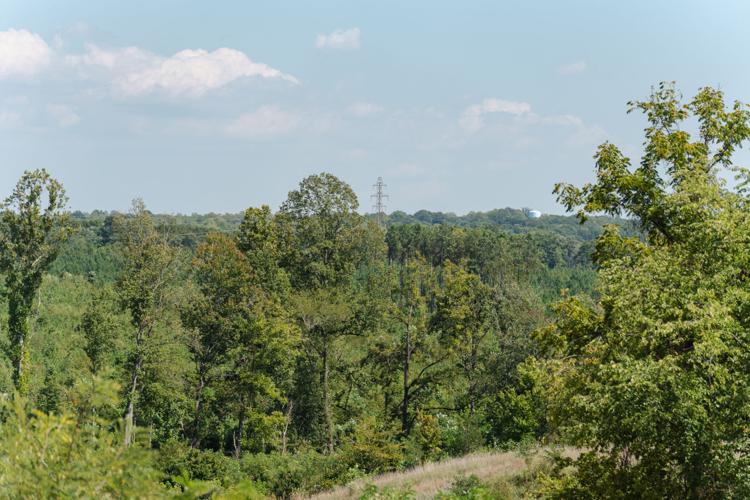
A view of land near U.S. 29 Business in Madison Heights in the vicinity of where a data center is proposed is pictured Wednesday.
Old Dominion Capital Partners LLC submitted the plan Aug. 18 for a data center that would include four buildings and a substation on a parcel behind the Seminole shopping center and located near the town center development owned by developer Sam Patel. He is the registered agent for Old Dominion Capital Partners and spoke in favor of a by-right zoning in M-1 staying intact at a public hearing on Aug. 18.
Amherst resident Sherry Carton said most of the community doesn’t want data centers and has spoken in a “single clear voice” against them at a time where it is nearly impossible to get large groups to agree on anything.
“We do not want our farmland, our quiet neighborhoods, and our small-town character sacrificed for massive concrete warehouses, round-the-clock industrial hums, and overwhelming and irreplaceable drains on our power grid and water supply,” Carton told the board Sept. 1. “This proposal offers our community virtually nothing in return. It creates a handful of permanent jobs, while forever altering the fabric of the place we call home.”
She asked who benefits from the proposed data center.
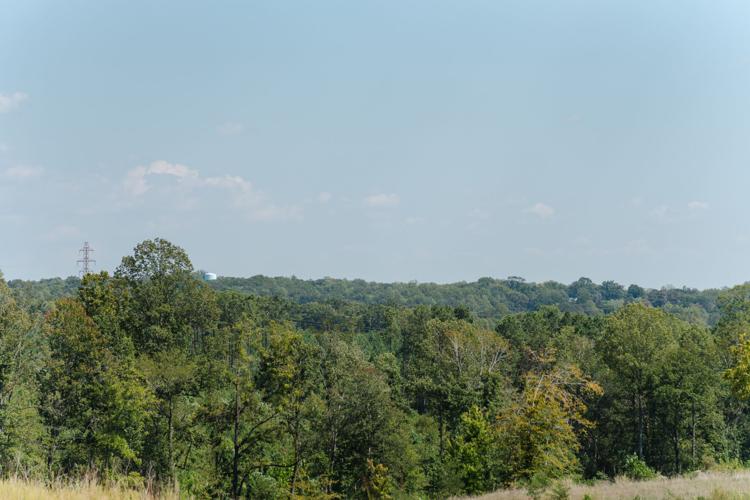
A view of land near U.S. 29 Business in Madison Heights in the vicinity of where a data center is proposed, pictured Wednesday, Sept. 2, 2026. (Matthew Perschall/The News & Advance)

“It certainly isn't the families who live here, it isn't the small businesses and the small business owners, and it's not the taxpayers who will be left dealing with the infrastructure strain long after the developers move on,” Carton said. “In my opinion, when a governing body moves forward with a plan that nearly all of its constituents explicitly oppose, it seriously damages public trust. It naturally raises concerns about transparency, accountability, and whether the public's voice is being fully considered.”
She said people are asking why the board seems so determined to move forward despite overwhelming public opposition. Residents deserve a clear public explanation of all negotiations, incentives, infrastructure commitments, and long-term obligations connected to the project, she said.
“If this board votes to approve this project against overwhelming documented opposition to the public, many residents will feel that their voices have not been heard,” Carton said. “They will question whether their interests of this community are being placed ahead of the interests of outside corporations. We deserve absolute transparency … You are elected to serve the people of this county, not to advance a major industrial project without first ensuring that the community's concerns have fully been heard and addressed.”
She asked for a three-month moratorium to allow time for a petition to clearly show the scale of the county’s large-scale opposition.
“Let the people speak clearly through a petition, and when they do, honor their voice, because this decision will not just shape a piece of land; it will shape the future, the character, and the trust of this community for generations to come,” Carton said.
Jennifer Casey, a county resident, said she doesn’t believe the proposed data center should be allowed without a special exception process where the public can speak to it.
“It's just too strange, and it feels like something's trying to be snuck in behind the backs of the citizens, and it's not right,” Casey said of the timing.
Casey spoke of the current drought conditions gripping the area and affecting water capacity, a major issue at play in considering data center projects.
“We cannot handle this at this time,” Casey said. “We need more time to check into the types of cooling systems … Do not grandfather this in. Let them abide by what the board voted for as far as the special requirements. That gives us more time to get it to the public.”
Amherst resident Barbara Pryor spoke of specifics of the data center site plan, which shows 1.2 million square feet of combined building space.
“It’s a big project,” Pryor said. “I think we're treading in very, very dangerous waters here. We need to look at this carefully.”
‘A legal question’
Data centers are only allowed in M-1 zoning and in no other district — it was by-right prior to Aug. 18 and now is a special exception, which requires a public hearing each before the Amherst County Planning Commission and the board of supervisors.
A legal question before the board is if the project is by-right, since it got in just before the board’s vote, or if it must adhere to the special exception process that is likely to draw large crowds in opposition, based on the trend at recent county board meetings.
The board held a closed session at the end of its Sept. 1 meeting, where “consultation with legal counsel pertaining to probable litigation” related to data centers was discussed. Mark Popovich, the county attorney, when asked by The News & Advance immediately after the closed session, said he could not comment on the legal issues in play at this time.
Samantha Salvi, of Madison Heights, thanked the board for passing more restrictive zoning regulations for data centers on Aug. 18. She noted a comment from Gov. Abigail Spanberger that moratoriums on data centers are a local choice among localities’ governing bodies. Salvi restated a desire many residents have for a ban to be enacted in Amherst County.
Salvi said the data center application was “conveniently” presented before the board’s Aug. 18 vote and it was obvious the applicant “knew exactly what they were doing.”
“Honestly, I think it's disgusting to try to push this on to us, knowing full well that no one here wants this,” Salvi told the board Sept. 1. “It's infuriating, and the exact reason why we asked for a moratorium in the first place. I'm calling on you, the board, to do the right thing. I don't know what you can do for us now, but I ask that you please protect us in any way that you can.”
Supervisor Claudia Tucker, who spoke of tax revenue that data centers would bring during the board’s Aug. 18 meeting, said she was caught off guard to find out that night the zoning application was filed.
“I put my hand on the Bible, I had absolutely no idea that was coming,” Tucker said.
She said she couldn’t speak about specifics of the closed session, stating: “I know it's a legal question as to whether or not it was a complete application.”
Tucker said she has not heard anything about future residential and commercial development slated for the Madison Heights Town Center not going forward because of the data center proposal.
“I do hope it moves forward,” she said of the town center project buildout.
A visit to Rosie’s
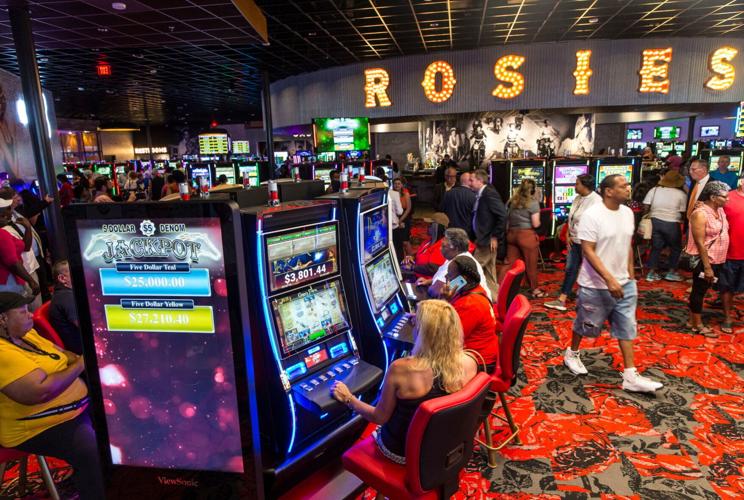
Customers play games during the grand opening of Rosie’s Richmond Gaming Emporium on Midlothian Turnpike on July 1, 2019.
One of Rosie’s most vocal critics in Amherst County, Tobey Thurston, spoke to the board Sept. 1 of her experience visiting one in Richmond with an open mind.
“I wanted to see for myself what we are talking about potentially bringing to Amherst County,” Thurston said.
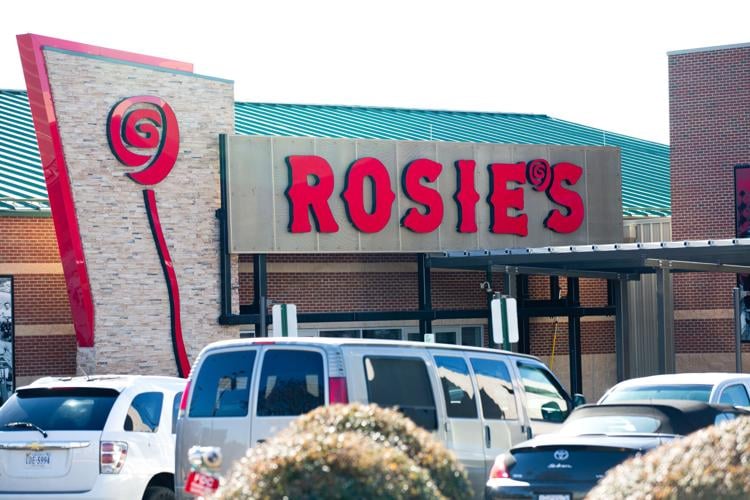
Rosie's Gaming Emporium on Vinyard Road in Vinton is shown. In fall 2021, a referendum on pari-mutuel wagering that would have allowed a Rosie’s location planned for the Seminole Plaza Shopping Center in Madison Heights was defeated by 54% of the county. That question is coming back around for a vote in the Nov. 3 election.
She said she felt “numbness” among the patrons in that room and noticed a long line of 50 people or more waiting to get in after 9 p.m.
“I drove home trying to picture that establishment here,” Thurston said. “I tried to picture it in Amherst County among the community where we live, raise our families, worship, work, and know our neighbors, and I just couldn't.”
Thurston said she understands others may have a completely different reaction to the experience but the lights, music and “promise of winning” did not change her mind about bringing in a Rosie’s.
“They made me feel more strongly that we shouldn't,” Thurston said. “I do not want what I saw and felt in that room to become part of Amherst County.”
She asked the board not to take any formal stance in support of the business as the majority did in 2021.
“Please respect that decision,” Thurston said of the first referendum’s outcome. “You have the opportunity to tell the people of this county that their voices matter, not only when they say yes but also when they say no.”
Pete Sudlow, a pastor at Temple Baptist Church in Madison Heights, asked the board to consider the impact of the proposed data center’s proximity to the church and Temple Christian School as far as noise and other factors. He also spoke in opposition to Rosie’s coming to the county.
“We do not have further vices in our community,” Sudlow said. “We can do better than that.”