

For any kid who has felt the rush of excitement when wandering down a vibrant pink aisle of dolls, fantasized about arranging tiny furniture in a Dreamhouse, or staged fashion shows to the click, click of plastic heels trotting down an imaginary runway, this exhibition is for you. And for anyone who grew up believing they could be anything they wanted to be — because Barbie® could — there’s plenty to rediscover, too.
"Barbie™: A Cultural Icon" has arrived at the Virginia Museum of History & Culture in Richmond, where it runs through Jan. 18, 2027. The exhibition celebrates more than 65 years of fashion and inspiration, exploring how Barbie became much more than a doll.
“Before history became history, it was actually just culture — and that includes pop culture,” says Elizabeth Klaczynski, curator of the exhibition. “Barbie is such an icon of American pop culture.”
People are also reading…

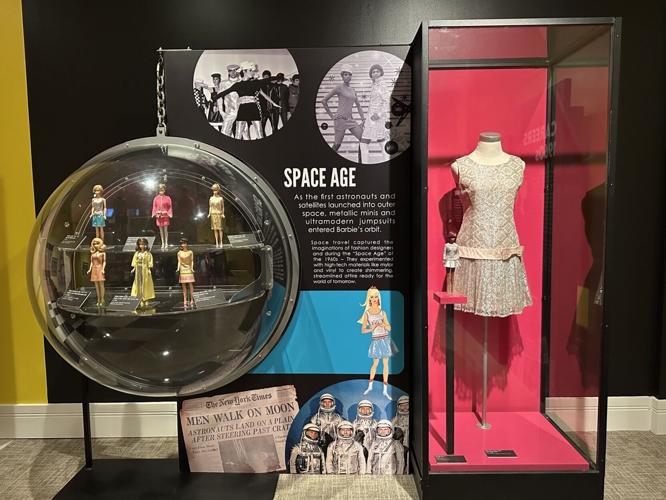
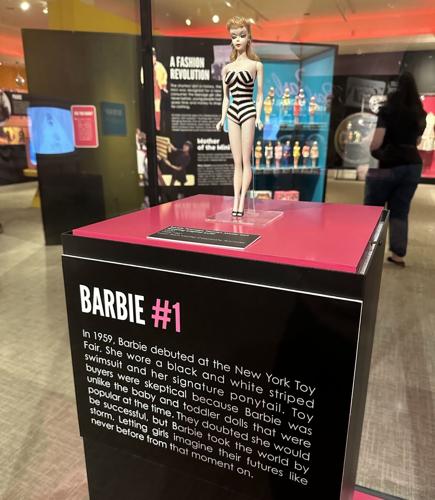
The exhibition features more than 250 dolls (including the original 1959 Barbie), fashion displays, the original Barbie Dreamhouse, and an exact replica of Andy Warhol’s Barbie, Portrait of BillyBoy.
But it’s not just lots to look at. “There’s all sorts of things to do and touch and play with,” Klaczynski says.

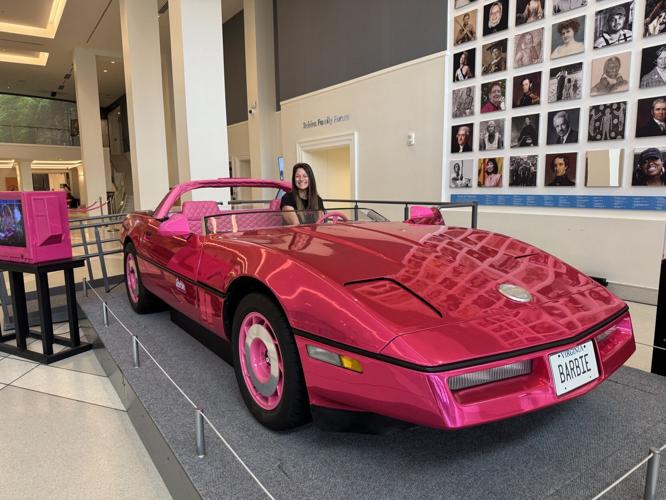
Upon entering the museum, visitors can take a (pretend) ride and lots of (real) photos in a life-size 1984 mirror pink Corvette. Inside the exhibition, music celebrating female friendship and empowerment, from Destiny’s Child and the Spice Girls to the "Barbie" movie soundtrack, sets the mood. A living room inspired by Barbie’s original Dreamhouse invites guests to settle onto its plaid couch, snap a photo, and flip through a book tracing Barbie’s history.

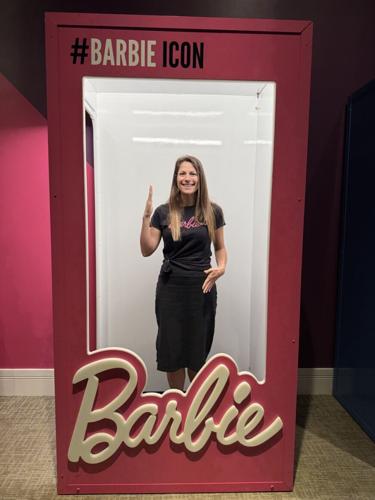
Life-size Barbie Boxes offer the chance to step into the roles of Barbie and Ken, while vintage Barbie commercials playing on television screens bring back memories of playtime past.
For a closer look at how Barbie’s signature style came to be, the “Behind the Seams” prototyping experience explores the design and manufacturing behind her many looks. In fact, Klaczynski says the most unexpected thing she’s learned in curating the exhibition has been the technical aspect of what has gone into manufacturing Barbie, especially in the early decades. “Ruth Handler was extremely particular and meticulous as far as what Barbie should look like, what her clothes should be, the materials she was made out of.” Her early outfits were designed by professional fashion designers, while civil engineers helped develop the doll herself, which was manufactured in Japan. “It was an intense process and very rigorous.”
Among all the fun, fashion, and photo ops, there is a real historical narrative running through the exhibition. “It’s the story of how Barbie reflects the evolution of opportunities for American women throughout the decades and how that has changed over time,” Klaczynski says.
When Barbie debuted in 1959, she was primarily a fashion model, known for her stylish clothes and accessories. But Handler wanted girls to imagine futures beyond traditional roles as mothers and caretakers, Klaczynski explains. By the early 1960s, Barbie was taking on aspirational careers, including teacher and astronaut. In fact, Barbie became an astronaut four years before Neil Armstrong walked on the moon.

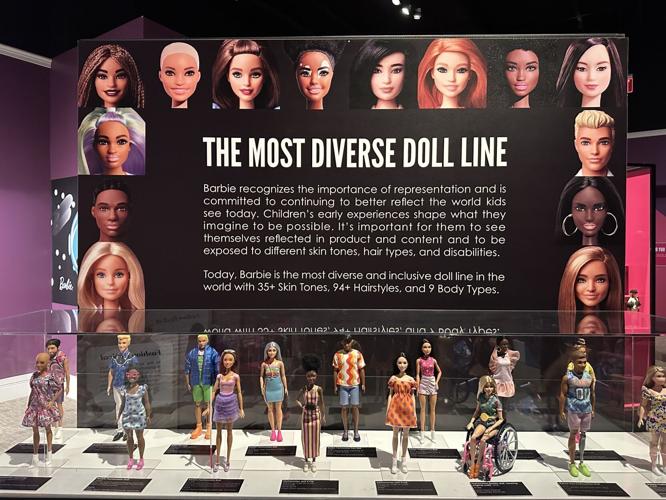
The exhibition also tells a story of inclusivity and diversity. “Barbie started out with a very singular identity, and now she has had over 250 careers, she comes in over 35 skin tones, multiple body types, different hairstyles, different hair textures, different levels of ability,” Klaczynski explains. “She really is an icon of how things have changed in American society.”

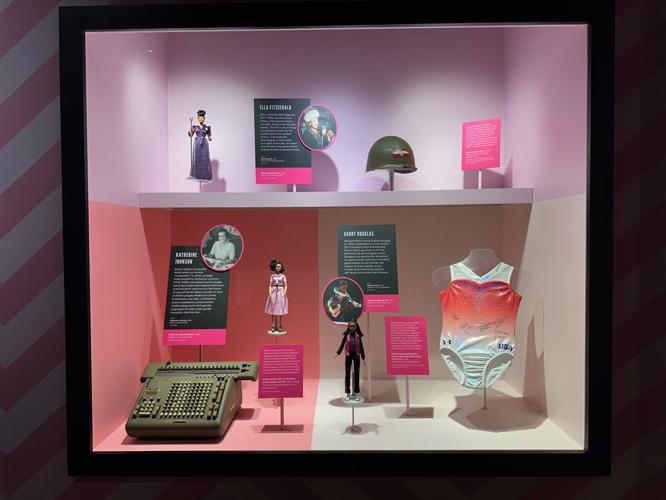
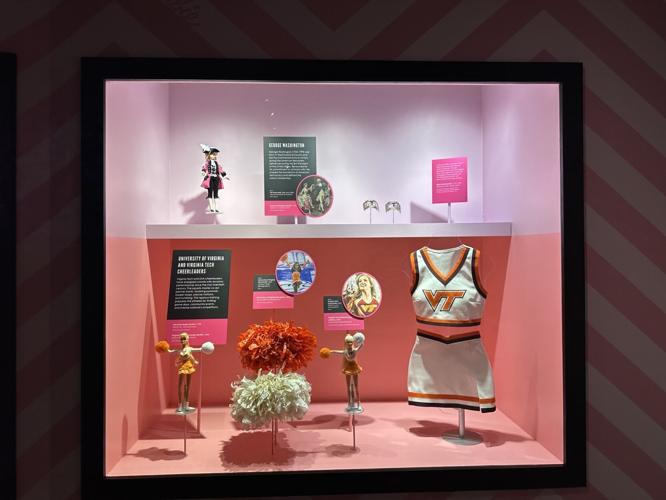
"Barbie™: A Cultural Icon" also displays six Barbies with a connection to Virginia, alongside museum collection objects, to tell a story about the subject and the commonwealth.

A Gabby Douglas doll appears with a leotard signed by the USA women’s gymnastics team from the 2016 Rio Olympics. An Ella Fitzgerald doll shares space with the steel helmet she wore during her World War II USO tour, while a Katherine Johnson doll is paired with a calculator similar to those used by the pioneering NASA mathematician. Cheerleading dolls representing UVA and Virginia Tech round out the collection.

There’s even a George Washington doll posed alongside Washington’s silver and copper shoe buckles. “George Washington is the only U.S. president to have a Barbie,” Klaczynski tells. Barbie herself, meanwhile, has been a president or world leader seven times.
So, what’s next for the iconic doll? Klaczynski expects Barbie to continue reflecting society’s expanding embrace of diversity and inclusion. “She’s going to continue to evolve as we evolve and become more open and more accepting, Klaczynski says. “She’s been here for over 65 years, and I don’t think she’s going away. People really connect to Barbie on a deep level, on many levels. And I don’t think she’s stopping any time soon.”