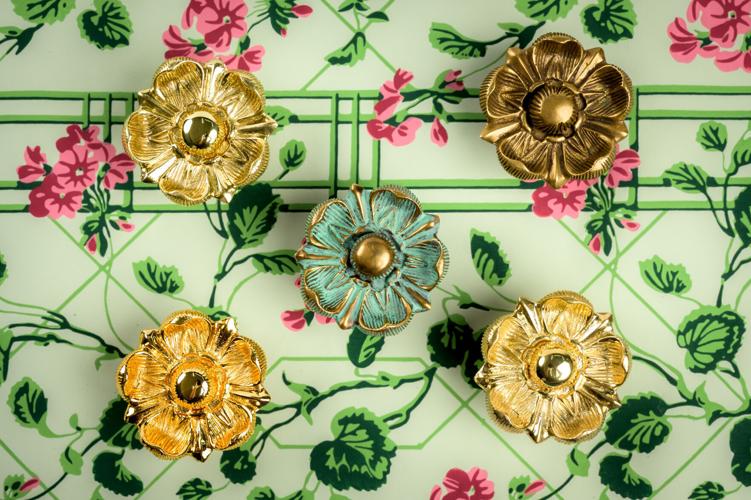



The Francis Flower is inspired by an 18th-century floral illustration from Colonial Williamsburg’s Rare Books archive and a floral metal mold discovered in the site's archaeology lab.
When it comes to home design, much thought goes into the selection of large-scale pieces: kitchen cabinetry, a standout sideboard for the dining room, handsome dressers for the bedroom. One element that often feels like an afterthought is the hardware that finishes these pieces.
For Art & Forge owners Rish and Cynthia Malhotra, hardware matters. The Norfolk-based couple founded the company in 2022, creating kitchen and cabinetry hardware from solid materials manufactured in India.
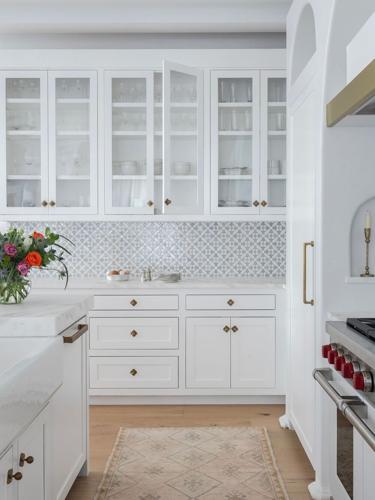
“Once you see hardware, you can’t unsee it,” Cynthia says. The type of hardware in a space can dramatically affect the look and feel of the room. In one Norfolk home, a kitchen outfitted with nickel hardware, gray countertops, and white appliances felt cold and sterile. The Malhotras worked with the client to transform the space using their custom York design — a satin brass, art deco-inspired cabinet pull that instantly warmed the room.
People are also reading…
“From a visual perspective, it does make a big impact, and then layering those details makes it more sophisticated,” Cynthia says. “It brings a different level of overall thought to the visual.”

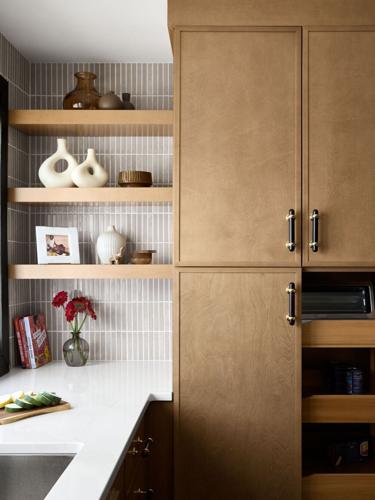
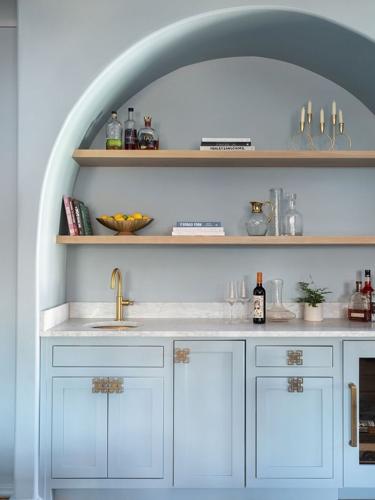
The Warren pull, shown in burnished brass, is characterized by its distinct thick linear ridges. The Edit Quatrefoil Decorative Backplate offers a perfect blend of historical significance and contemporary appeal with a touch of classic beauty. Knobs shown in Tides Ball and The Edit Beehive Reeded Knob.
What sets their products apart is quality. “It’s not meant to be a fast fashion decor product,” Cynthia says. Unlike inexpensive zinc knobs designed to be swapped out with the next trend, Art & Forge hardware is made to transcend time and passing fads. “We look for longevity,” she says, noting they’re not aiming to compete with mass retailers. “It is an investment, so we want it to last — the design itself as well as the materials.”

The Colley collection is a sophisticated fusion of warm tortoise resin held within polished brass (shown) or polished nickel.
Each product begins with a concept. When developing a new design, the Malhotras consider materials, ergonomics, and environment — factors that ultimately influence style, finish, and maintenance. Unlike lighting overhead, hardware is something people interact with constantly; it must feel as good as it looks. Subtle tactile details come into play, like a knob with hand etching on the back — unseen but felt.
Once prototypes are hand sculpted, production moves to a foundry in India. From raw materials to finished pieces, the process involves more than 30 steps. Molten brass and bronze are poured into custom sand molds, capturing intricate details. Skilled artisans refine each piece — cutting, grinding, and machining — before polishing, finishing, and applying color.
Rish is from Northern India, long considered a historic metalworking hub, where multi-generational artisans have practiced these techniques for centuries. “Folks have been there 20-plus years, and usually jobs are handed down within families,” Cynthia says. “This is something they would have watched their dads doing. The level of accuracy and efficiency in motion is really neat when you’re seeing somebody who’s done the same thing over and over.”
Historically, the industry has been male-dominated, but the Malhotras are working to change that. The couple is committed to fair wages, and a portion of Art & Forge’s profits supports artisans in continuing to practice and refine their craft, reflecting a growing trend in developing nations to build a more inclusive workforce.
Their respect for traditional techniques — sand casting and hand finishing — is central to their philosophy. Each piece is guided by skilled hands and sharp eyes. The process isn’t fast, but it results in products that last. In a world increasingly driven by automation, Rish believes something essential is lost when handwork disappears. “Emotionally, we as human beings like things which have that character,” he says. “When that’s taken away, everything starts looking the same and has no imperfections. We like variation.”
Manufacturing in India is both a quality decision and a personal one. “It’s a part of who we are with our personal story and with the business as well,” Cynthia says.
The couple has lived in New Delhi, New York, and Washington, D.C., and traveled extensively — experiences that have shaped their design aspects. But their story began in Virginia, where they met at William & Mary’s Mason School of Business.
After graduation, Rish worked in advertising and account management, while Cynthia focused on change management and organizational strategy. When the couple returned from India, they came to Hampton Roads — initially as a pause before a planned move to London. “And then COVID hit,” Cynthia recalls. Instead of continuing on, they stayed. Rish began exploring business opportunities, eventually partnering with another hardware brand.
In 2022, they launched Art & Forge, building the business during evenings and weekends. By 2024, Cynthia left her full-time role to focus on the company; Rish followed in 2025.

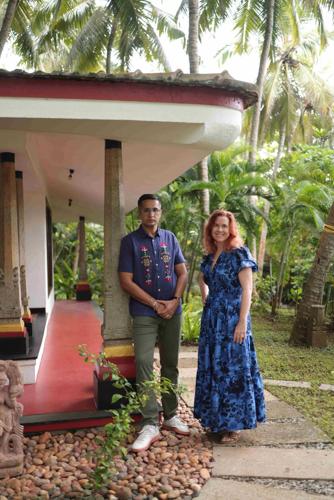
Rish and Cynthia Malhotra founded Art & Forge in 2022, creating kitchen and cabinetry hardware from solid materials manufactured in India.
“I feel very thankful that we get to spend so much time together,” Cynthia says. “When somebody’s working 10 or 12 hours separately, you don’t get that interaction.” What used to be shared over dinner now fills conversations at every meal. “It gets to the point where our boys ask, ‘Are you still talking about knobs?’” she says with a laugh.
Alongside their work, the Malhotras have built deep ties within their Norfolk community. “We fell in love with our community there,” Cynthia says. “There’s so many kids in the neighborhood, it’s walkable, the Chrysler Museum is right there. We feel strongly about supporting this area, and it has so much potential.”
That local pride is reflected in their collections. Names like Bute, Colley, Maury, and Olney nod to Norfolk streets, while Tides Ball references an architectural design element found on the Harrison Opera House. The city’s character — from Freemason’s slate roofs to Ghent’s wraparound porches — informs their work.

The Maury Fretwork Knob is a sophisticated blend of modern geometry and traditional fretwork, crafted to elevate interiors with modern elegance.
“As Norfolk residents, we feel very strongly that this is our home; this is our community,” Cynthia says. The couple gives back through philanthropy, supporting organizations such as the Foodbank of Southeastern Virginia and the Eastern Shore and Azalea Little League.
Their appreciation for history extends beyond Norfolk. Art & Forge has collaborated with Colonial Williamsburg, a partnership sparked by a former William & Mary professor. After presenting their work, the Malhotras were invited to develop a collection inspired by 18th-century design, reimagined for modern homes — a process that involved deep research into the museum’s resources.

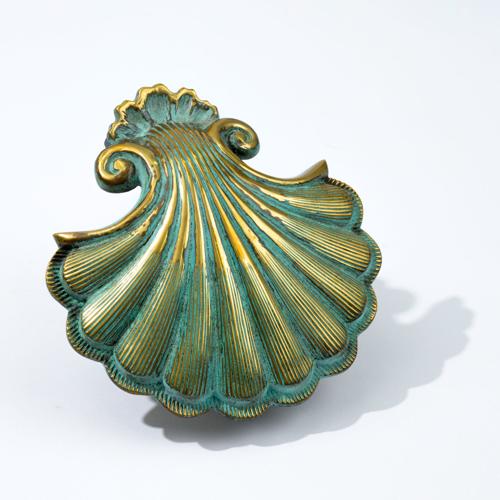
What they didn’t want was the overly polished, ’90s brass look. “We wanted something that felt modern, fresh, and crisp,” Cynthia says. Their latest piece, a hand-chiseled Tidewater shell door knocker, continues that dialogue between past and present.
They also collaborate with emerging designers through their “Forged By” series, including Atlanta-based designer Jared Hughes, producing limited-run pieces that highlight new voices in design.
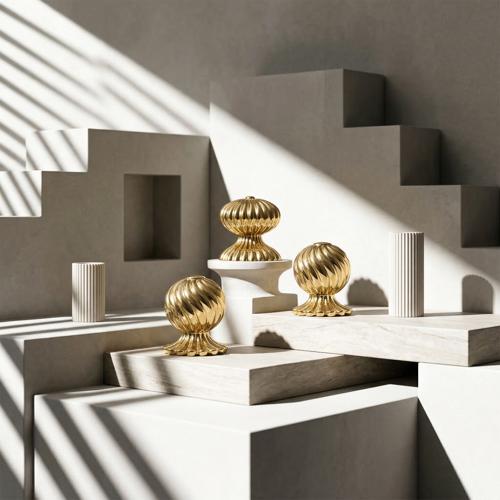
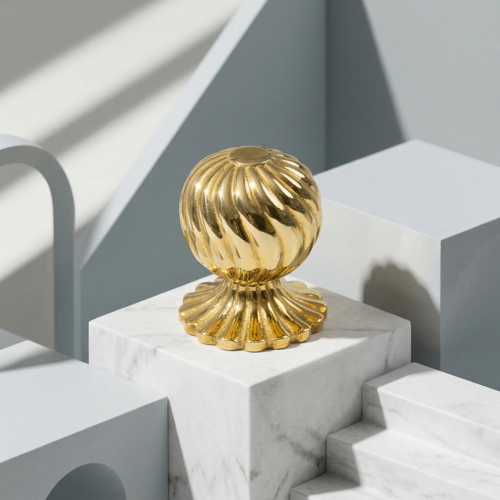
Forged By Jared Hughes
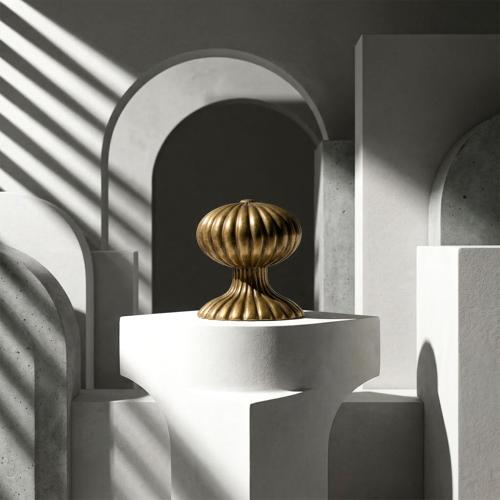
Forged by Jared Hughes
Customers can purchase directly through Art & Forge’s website, though many designers introduce the pieces to clients through their projects. The brand has developed a loyal following among those seeking something different and intriguing.
For the Malhotras, the work is about more than design; it’s about connection. One lesson they hope to instill in their boys is that everything is connected. The boys have traveled to India with them since infancy, experiencing firsthand the relationship between craft, culture, and community. “Bringing that bridge between both has been important for us,” Cynthia says. “Building something that they’re proud of — that we’re proud of — to hopefully pass on to them one day.” The children are already part of the process, stopping by, observing, helping where they can. “It’s been neat to see it through their eyes,” she says.
Ultimately, the goal is simple but enduring: to create pieces that are meaningful in everyday life. “I hope when someone is using the products, it feels special — but also makes their life easier and functionable,” Cynthia says. “Something people see as an investment and know it’s going to be part of their life for a long time.”