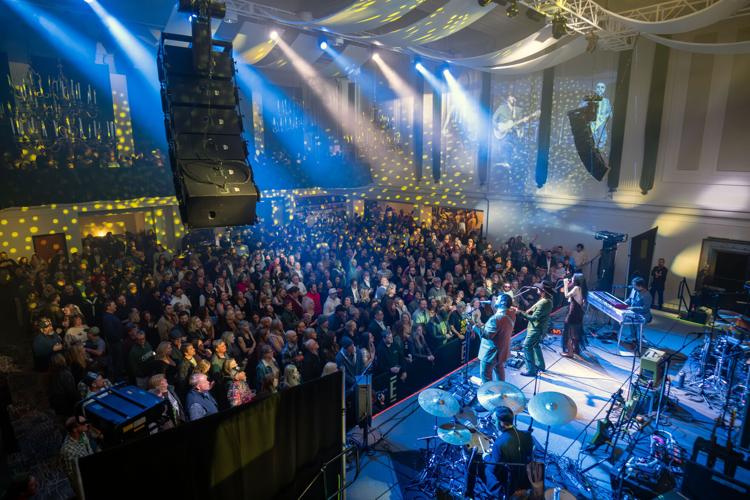


The day before musician Grace Potter filled The Exchange Music Hall in Roanoke with her soulful roots-rock stylings, during its inaugural concert on New Year’s Eve 2025, local musician John McBroom put on a small concert. The performance was a thank you to the construction crew, but it also doubled as a sound check for The Promissory Hotel, located within the same building. General Manager Johnie Valencia, along with three other staff members, fanned out to the hotel’s floors to ensure that the rooms were in fact quiet. The fact that there are incredible acoustics in the music venue and no sound in the rooms is a testament to the building’s bones and creative vision for the multi-use space.

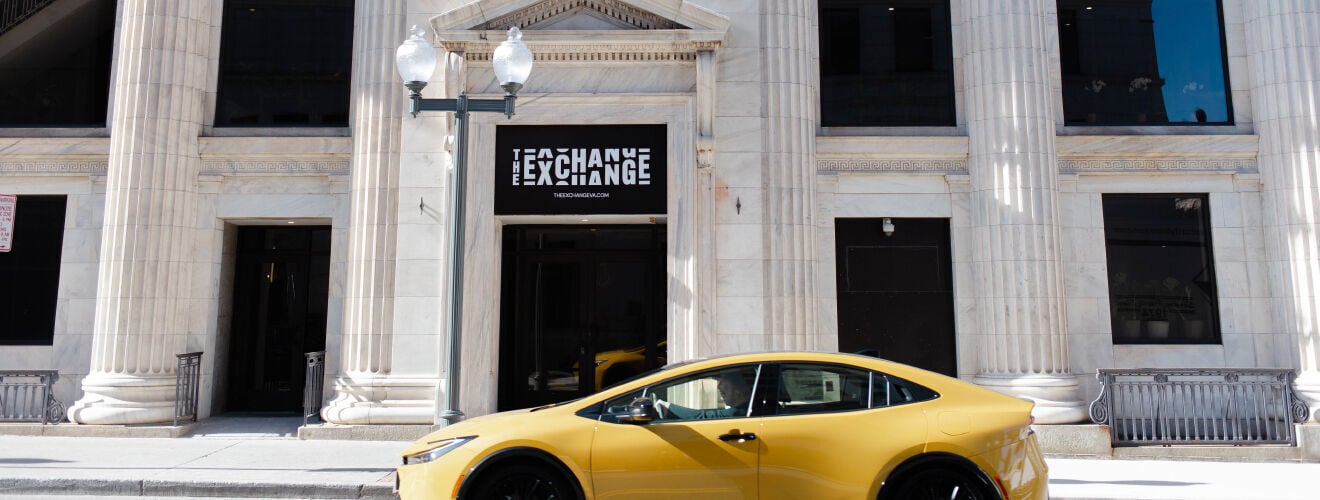
The Exchange Music Hall
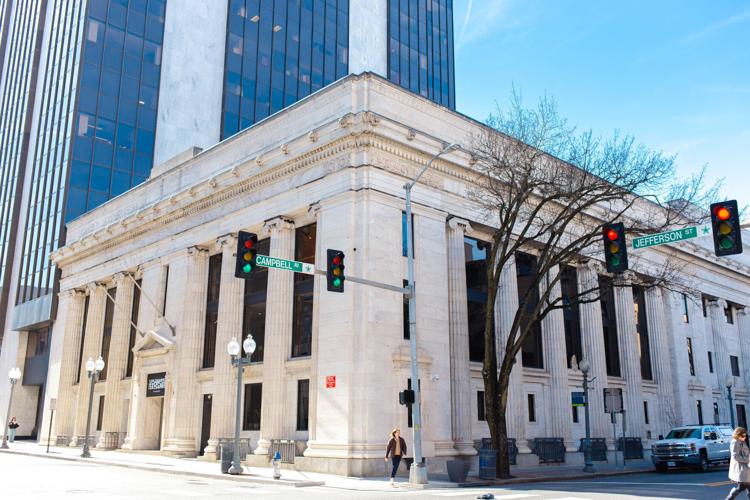
“They don’t make buildings like this anymore,” Valencia says, gesturing to the marble building that has stood at the corner of Jefferson and Campbell since 1912. For decades, the First National Exchange Bank building served as one of Roanoke’s temples to capital. Now, thanks to local company Hist:Re Partners, the building trades in cultural currency as a destination concert venue, boutique hotel, and restaurant.
People are also reading…
When Developer Lucas Thornton, Hist:Re Partners’ founder, first stepped into The Exchange’s great hall, taking in the ornate plasterwork, grand ceiling, and rich architectural details, he had a clear vision for creating a beautiful, dramatic performance space. But he had more to consider than the 15,000 square feet that covered the original four-story building. Thanks to additions made in 1954 and 1963, the building now comprised 55,000 square feet. “The solution was to complement what we were doing in the entertainment space with something that we thought would work. For us, that was hospitality,” Thornton says.

Given Roanoke’s growth as a tourist destination — thanks to its Blue Ridge Mountains locale and reputation as an outdoor enthusiast’s paradise, combined with its restored Amtrak service — a boutique hotel made sense. Hist:Re Partners abides by an adaptive reuse ethos, and Thornton says he follows two adages as a preservationist. The first is “to do no harm.” He sees preservation as a rehabilitation, where one seeks to preserve the architectural significance and character of a building. The second, borrowing from Thomas Jefferson, is that “the world is always for the living.” To that end, preservation is an act of forward-looking investment that identifies the reason why it has value today.
Exploring that tension between old and new is partly why Thornton finds the project so interesting. “There’s the pretense of bankers who built this and what it represented to them as a temple to capital and the playfulness that we are bringing to it now, the idea of hospitality and restaurants and music; this is very much about entertainment and play,” he says.

Hist:Re Partners worked with Richmond-based design firm 3North to preserve the striking 20th century neoclassical marble and granite building, replete with carved lions and deep cornices, as well as the pastiche of embellishments made throughout the years. One of the biggest challenges was figuring out how to get light into the hotel rooms. Their answer, developed in collaboration with various partners — including the Virginia Department of Historic Resources, National Park Service reviewers, and architectural historians — was to create a four-story atrium in the most modern section of the building, which was built in 1963. “And even that’s hidden behind the façade, so you don’t know it until you get into it,” Thornton says. “That is its own unique element because it creates volume with its high spaces, its architectural beams — that in its own way is striking.”

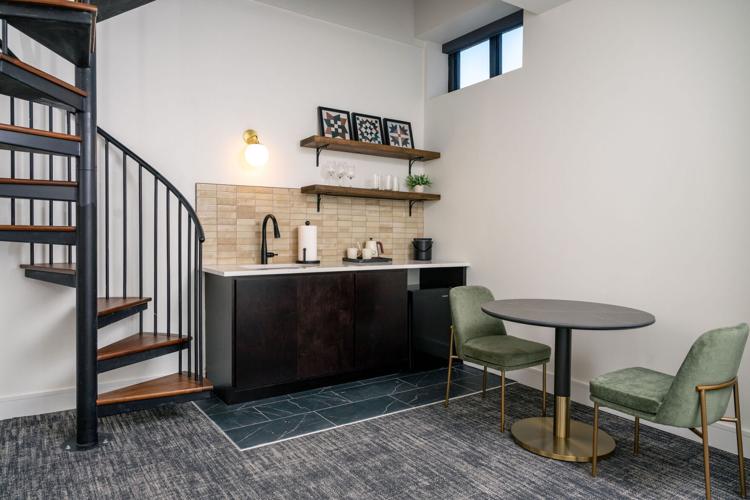
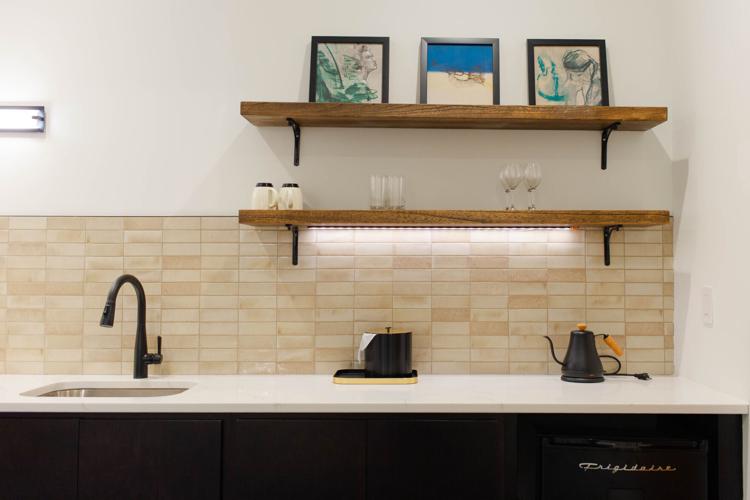
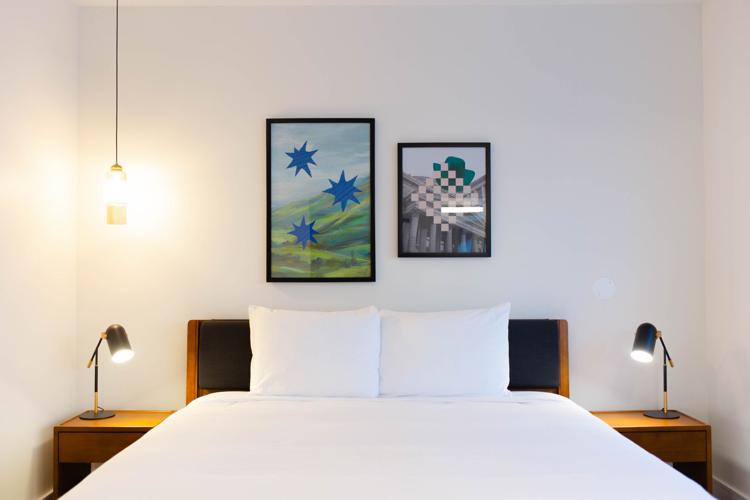
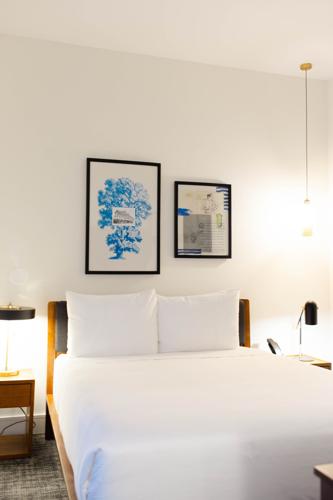
Thornton says he and the architects were aligned around converting the building’s offices and spaces to suite-style hotel rooms with a lounge, wet bar, and one or two bedrooms. They pursued a modern, minimalist feel, outfitting rooms with Thuma beds inspired by simple Japanese architecture and complementing the room’s custom millwork’s clean, straight lines with brass piping.

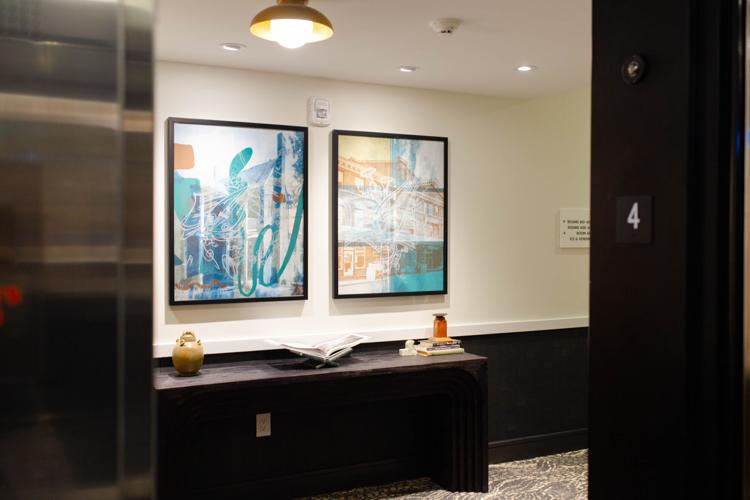
Carefully curated lamps, warm lighting, and tastefully framed photographs and artwork — reflecting themes of Roanoke, banking, and music — give the rooms a welcoming vibe. Modern amenities meet the requisite boutique hotel guest needs: high-end bedding (including a custom-designed Sealy mattress that’s exclusive to The Promissory), plush robes by Garnier Thiebaut, Molton Brown luxury bath products, and premium teas from Tea Forté.

The other piece of The Promissory’s hospitality equation is a restaurant. Opening in June, Suerte is a Spanish restaurant and wine bar serving tapas, pintxos (small snacks), and larger plates inspired by both land and sea. The food and beverage program is led by veteran Roanoke restaurateur JP Powell, co-owner of downtown spots Lucky and Fortunato.
“I have been very gratified to be part of this chapter of Roanoke’s history in which there is enthusiasm for what’s going on downtown,” Thornton says. “I am very excited to be part of the groups that are creating a complement in the cultural space so that we have restaurants and entertainment and things to do once we get off the trail.”